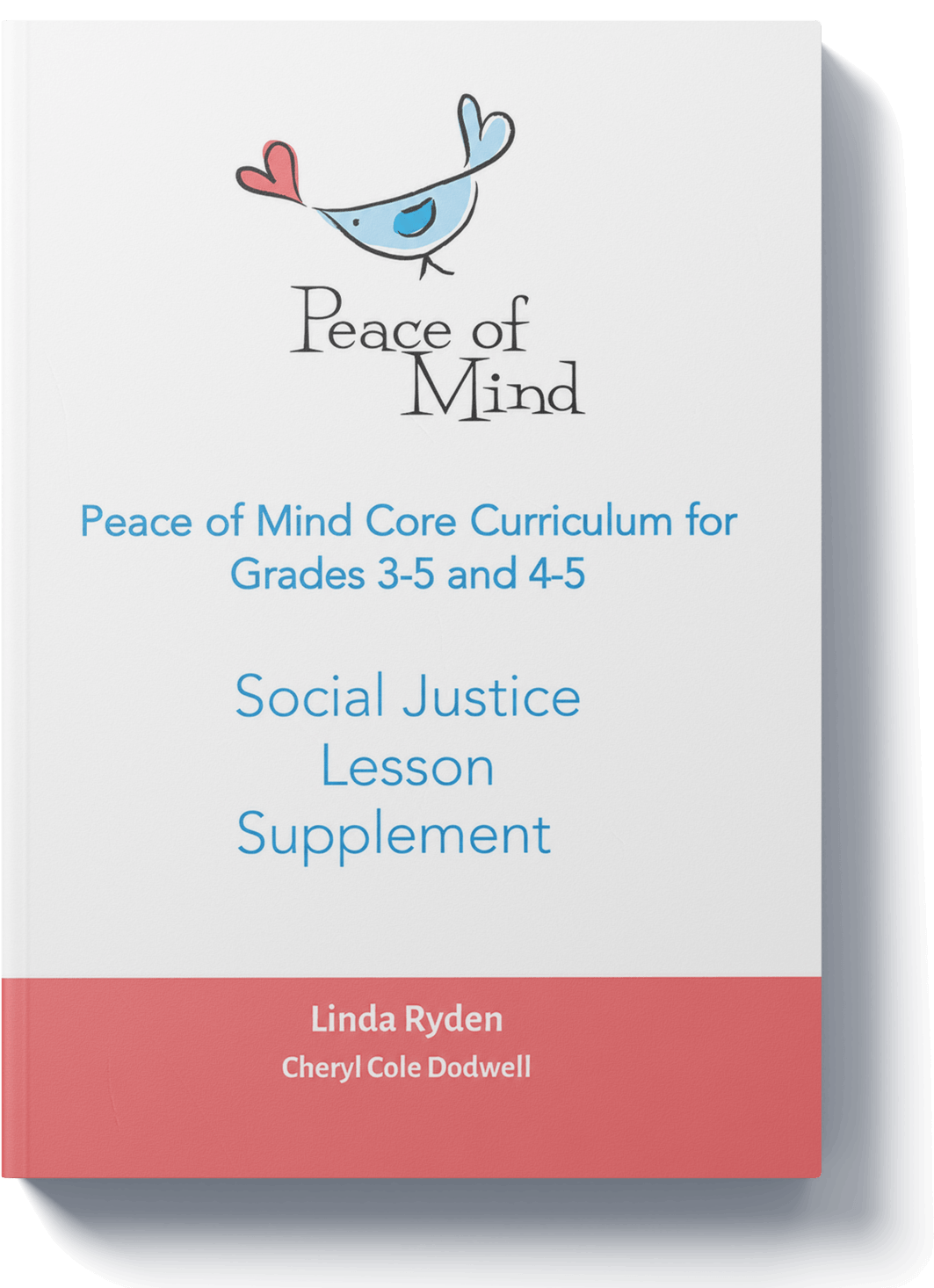
Curriculum / Social Justice Lesson Supplement for Grades 3-5
Peace & Justice Program: Building Peacemakers from the Inside Out
Mindfulness and social-emotional skills aren’t just tools for managing emotions. They’re the foundation for becoming someone who stands up for what’s right. The Peace & Justice Program teaches both as one integrated practice, connecting inner awareness and outward action.
This is a free 17-lesson supplement for honest and age-appropriate conversations about race, equity, and what it means to stand up for others.
From Inner Awareness to Outward Action
Every Peace of Mind curriculum teaches students to know themselves, manage their emotions, and treat others with kindness. But we’ve always believed that these inner skills have a larger purpose: equipping young people to engage with others, their communities, and the world with courage and compassion.
The Peace & Justice Program is where that vision comes to life. Rooted in mindfulness and SEL, it helps students develop not just personal resilience but the awareness, empathy, and critical thinking they need to understand and respond to injustice.
As Dena Simmons, Director of Education at the Yale Center for Emotional Intelligence, has said: “Teaching for an antiracist future starts with us, the educators. Educating students to see and respect the humanity and dignity of all people should be a national imperative.”
Peace of Mind shares that conviction. And we’ve built a curriculum to support it.
Mindfulness as a Foundation for Justice
In the summer of 2020, Peace of Mind published the Social Justice Lesson Supplement to help educators engage in the conversations their students needed most. This set of 17 lessons uses the mindfulness and SEL skills already built into the Peace of Mind curriculum, and puts them to work in a new way.
What makes this approach distinctive is the integration of inner work and outer work. This supplement teaches mindfulness not only as a means to help students manage big emotions, but as a foundation for becoming kind and courageous agents of positive change.
Students who understand their own minds, can regulate their emotions, and have practiced compassion and gratitude are better equipped to engage with challenging social topics—without shutting down, acting out, or walking away.
What’s Included
17 Lessons for Courageous Conversations
Topics across the curriculum include:
Identity and self-awareness
The brain’s role in bias
Stereotypes and how they form
Empathy and perspective-taking
Standing up for others
Beginning to understand systems of power and equity